
Shasta Released Mugshot Records
A booking photo is tied to an arrest or booking event. It is separate from the release event, even when both are part of the same jail record. California's public arrest-information law, Government Code section 7923.610, specifically includes public fields such as the time and manner of release or current holding location, charges or holds, bail, and booking details unless an exception applies. Booking photographs may require a more focused request and may be affected by policy, exemptions, or state law.
For Shasta County, the official sources reviewed did not confirm a separate Sheriff page or app that publishes mugshots of released inmates as a release feed. The county path is current-custody oriented. That means a photo visible during custody may disappear when the person leaves the jail feed. The release record, court disposition, VINE status, and CDCR records are better tools for confirming what happened after booking.
The safest way to treat a Shasta County mugshot is as one record element. It can help identify a booking, but it does not answer whether the person posted bail, completed a sentence, transferred to another agency, entered PRCS, or still has a court case. Pair any photo source with the release event and the court record before drawing a custody conclusion.
Where Shasta Mugshots Appear
Each photo channel answers a different question. Some channels help identify a booking event. Others confirm state custody or a public-safety release. None should be treated as a complete official list of people released from Shasta County custody.
No official Shasta sheriff app with a released-mugshot feature was confirmed in the research. That is important because many county templates assume a mobile app carries booking photos. Shasta content should not make that claim unless an official publisher, store URL, and feature list are later verified.
| Channel | Photo status | How to use it |
|---|---|---|
| Shasta current-custody path | Possible while a person is in custody, not confirmed as a released-photo archive | Use the official Sheriff custody path to see current jail status, then confirm release separately. |
| Public Records Act request | Best official request path if maintained and releasable | Ask for the booking photo tied to a named booking event and date range. |
| CDCR CIRIS | Relevant only for state-prison cases | Use for CDCR custody or release, not ordinary Shasta jail mugshots. |
| VINE | Custody-status tool, not a mugshot archive | Use for release or transfer alerts, then verify through agency records. |
| Sheriff media releases | May include images in selected cases | Use for case context, not release confirmation. |
| Third-party mirrors | Non-official discovery only | Do not use as proof of release, custody, sentence completion, or current status. |
Official Shasta Photo Paths
The official Shasta path starts with the Sheriff's jail and in-custody information, then moves to a records request if the person has been released or the online lookup does not show the needed photo. A current-custody image, if available through the jail lookup, can be tied to a live booking record. It should not be assumed to remain online after release.
The Shasta County NextRequest portal is the clean formal route for county records. A request should identify the Sheriff's Office or Custody Division, the person's full name, approximate booking date, booking number if known, and the requested booking photograph if available and releasable. Purpose-neutral wording helps keep the request narrow and records-focused.
Shasta County's NextRequest portal supports formal public-records requests for county records, including a targeted booking-photo request when appropriate.
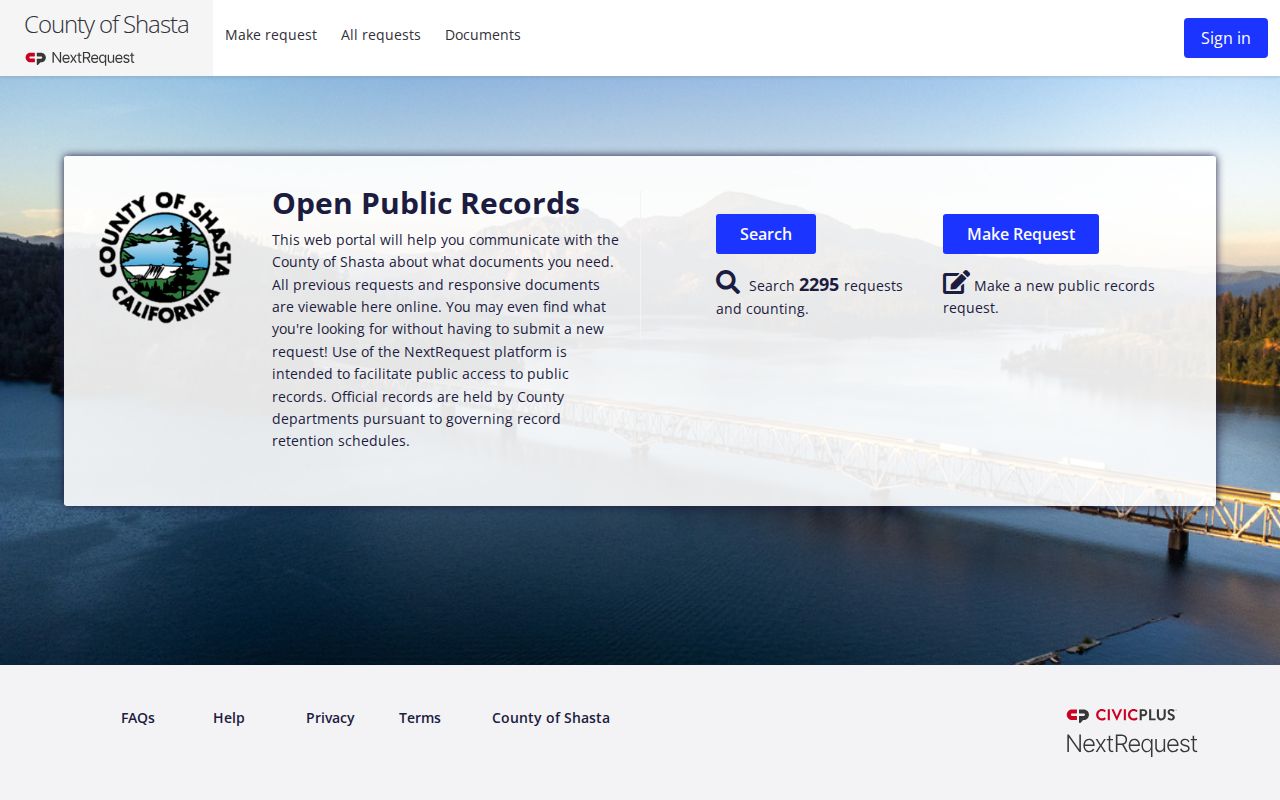
The portal is useful when the public web path does not publish a released booking-photo view.
Request a Shasta Booking Photo
A targeted request is stronger than a broad demand for every record about a person. Shasta County's PRA guidance asks requesters to be specific, provide date ranges, and identify departments or employees involved. Court records are not county records, so court disposition requests belong with Shasta Superior Court rather than the county PRA portal.
A good booking-photo request should also ask for the release fields if release status matters. The same booking event can have a photo, charges, bail, holds, booking time, and release time. Asking for only a photo may leave out the most important release context, while asking for every record about a person can slow the response and invite exemptions.
- Identify the booking event, including full name, known aliases, and approximate arrest or booking date.
- Add the booking number or court case number if known.
- Choose Shasta County Sheriff's Office or Custody Division as the likely department.
- Ask for the booking photograph if maintained and releasable, plus the booking/release record if needed.
- Request the time and manner of release or receiving agency when release status is part of the question.
- Use the court portal for sentencing, dismissal, probation, or case-disposition records.
Note: A booking photo can identify a booking event, but it does not prove that the person was released to the community.
CDCR Photos and Shasta Releases
CDCR records are useful only when the Shasta County case moved into the state-prison system. A county jail mugshot and a CDCR public photo are separate records from separate agencies. If a Shasta conviction led to a state-prison sentence, CDCR CIRIS may be the correct state-level search for custody status, release dates, parole eligibility, and public identifying information.
A CDCR record should not be used as a substitute for a Shasta County booking photo request. It may show the person in a state-prison context after county custody ended. The release path may then move to CDCR parole, county PRCS, or another supervision system. For local release confirmation, use the county release record and court disposition.
Shasta Media Release Photos
The Shasta County Sheriff's Office media releases page is a local channel where arrest or investigation updates may appear. A media release can help identify a case date, arresting agency, suspect image, charge description, or public-safety context. It is still not a release record.
Media releases are selective by nature. They usually appear for public-safety announcements, investigations, wanted-person information, or agency updates, not for every person booked into or released from jail. If a photo appears there, it should be treated as case context and reconciled with custody and court records before any release conclusion is drawn.
Sheriff media releases should be reconciled with jail, VINE, court, or CDCR records before drawing any conclusion about current custody.
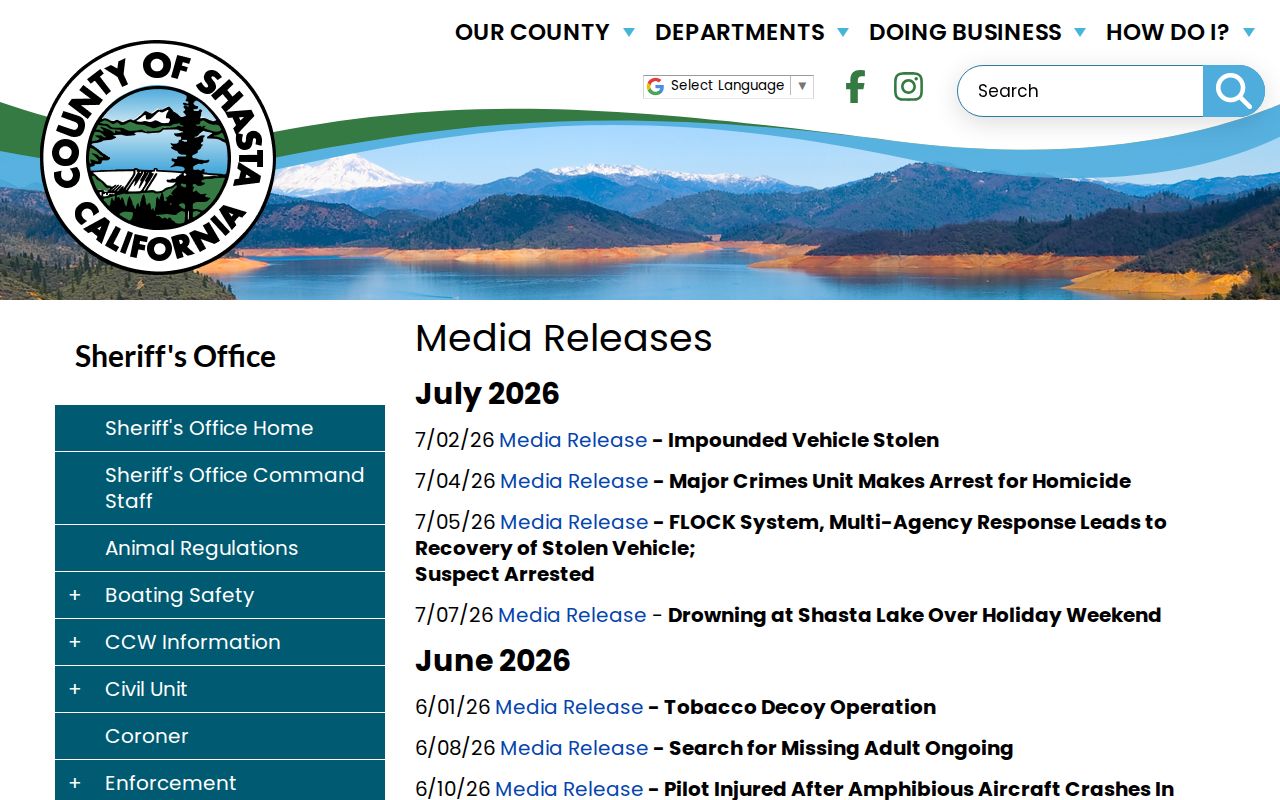
News visibility and custody status are different. A person may be named in a release or arrest update while the actual jail release status sits in a separate record.
Non-Official Mugshot Mirrors
Some commercial or third-party sites mirror Shasta arrest and booking-photo information from public sources. They can sometimes help with spelling, booking dates, or the existence of a public booking event. They are not official Shasta County release feeds, and they may keep photos visible after an official current-custody record changes.
This page does not hotlink commercial mugshot or data-broker pages. When a third-party image conflicts with official records, use the Sheriff's release record, court case, VINE alert, or CDCR record as the stronger source. A non-official mugshot page cannot confirm release, sentence completion, parole, probation, or current custody.
Third-party retention can also differ from government retention. A current jail lookup may drop a person after release while a mirror keeps a booking photo visible. That mismatch does not prove the official record is wrong. It shows why the originating office, court, and custody-status channels are the better source for current facts.
California Mugshot Removal Law
California Civil Code section 1798.91.1 creates an important rule for people who encounter a booking photo on a third-party site. It makes it unlawful for a person engaged in publishing or disseminating booking photographs to solicit, require, or accept payment from the photo subject to remove, correct, modify, or refrain from publishing or disseminating the photo. A public entity may require a reasonable administrative fee to correct a booking photograph.
Civil Code section 1798.91.1 is a booking-photo pay-to-remove restriction, not proof that a Shasta County released mugshot is official or current.
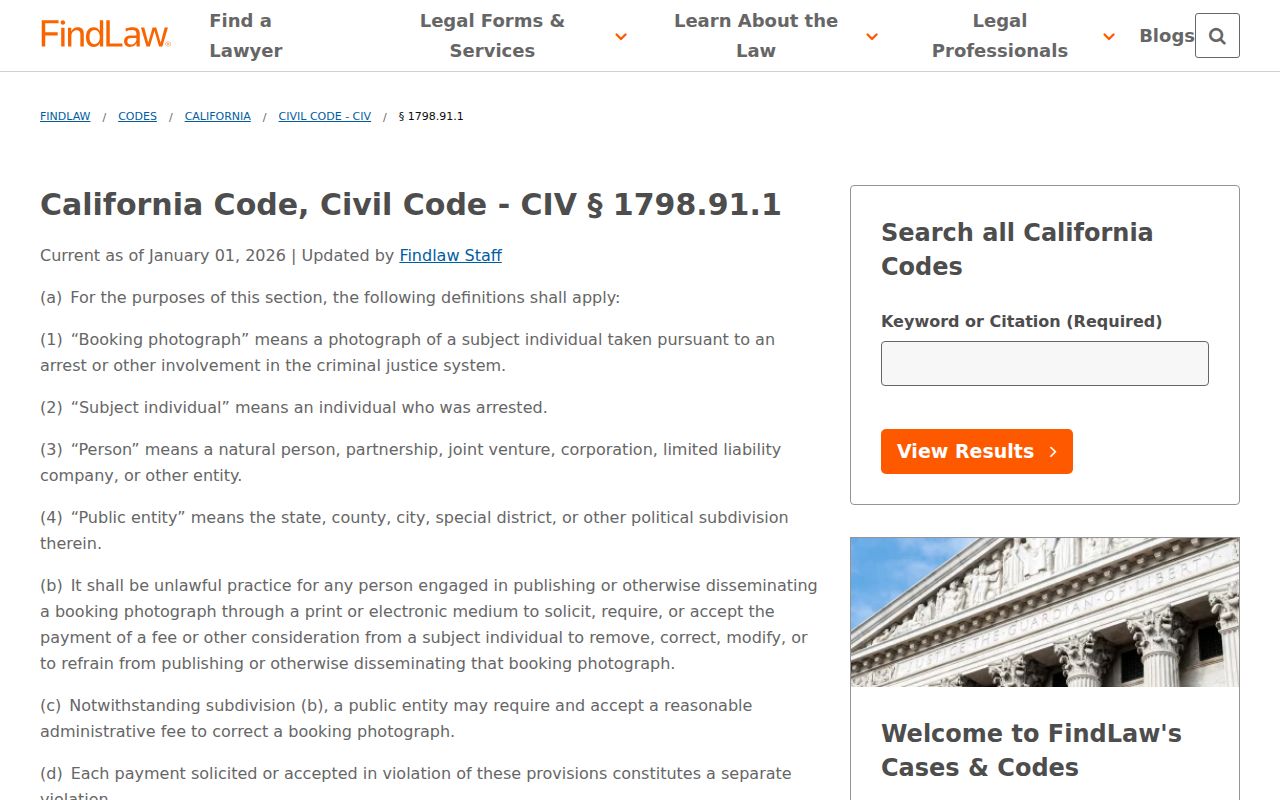
The law is useful when evaluating a third-party publisher, but release status still has to be verified through the originating custody, court, or corrections agency.
Legal use limit: Mugshot and release-record information may not be used for credit, employment, tenant, insurance, or any other FCRA-regulated decision.
For official sources, a correction request should go to the agency that maintains the record. For non-official publishers, the California statute is most relevant when payment is demanded from the photo subject for removal or modification. Those are different paths, and neither one replaces the need to verify the underlying release status with Shasta County or CDCR.
Dismissal and Photo Visibility
California record-cleaning can change how a conviction appears, but it does not automatically erase every historic booking event from every system. Shasta Superior Court records, county custody records, CDCR records, media releases, and third-party mirrors may update under different rules. If a case was dismissed, sealed, restricted, or cleaned under California procedures, verify the official court order first.
For official Shasta County photo questions, use the agency that created or maintains the image. For court disposition questions, use Shasta Superior Court. For third-party copies, use California's booking-photo law and the publisher's own process, while keeping the official record separate from any commercial mirror.
A dismissal or record-cleaning order can be highly relevant to what appears in court or agency records, but public web copies may lag or fail to update. The practical sequence is to obtain the court order, contact the official source that maintains the booking photo, and then address any non-official publisher separately. Keep copies of the court and agency responses because those documents explain the status better than a screenshot of a mugshot page.