
Shasta Projected vs Actual Release
A projected date is a calculated or expected date. An actual release date is the event that happened. The difference matters in Shasta County because the same person may move from local jail to court, CDCR, parole, PRCS, federal custody, or another hold. A current-custody page may show the person while in jail, but it does not become a permanent release-date archive after the person leaves.
Scheduled vs actual: A scheduled or projected date can change before release; the actual release record should show the time and manner of release after the event occurs.
Pretrial detainees are different from sentenced inmates. A person held before trial is waiting on bail, release on own recognizance, a court order, dismissal, transfer, or another legal event. That person does not have a normal sentence-ending date. A sentenced jail inmate or state prisoner may have a release calculation, but the calculation still depends on credits, holds, court orders, and agency processing.
The release-date question should always be phrased by custody type. "When will a Shasta County inmate be released?" can mean a bail decision at the Main Jail, a local sentence calculation, a CDCR EPRD, a BPH parole-eligibility date, a PRCS handoff, or a transfer to another agency. Those are different records. A date from one system should not be copied into another system without checking the legal event behind it.
Find a Shasta County Release Date
The first step is to identify the custody layer. If the person is in the Shasta County Jail, use the county jail and court path. If the person was sentenced to CDCR, use the state prison path. If the person is in federal custody, BOP and federal court records are separate. A Shasta County case can start locally and later become a CDCR release-date matter after sentencing and transport.
For a local jail sentence, the court record is especially important because it shows the sentence imposed, credit for time served, probation terms, and any later violation or modification. The jail may calculate a local release date from those inputs, but the public website may not expose that date after release. For a state-prison term, CDCR receives court documents and performs the prison calculation under state rules.
- Check whether the person is still in the Shasta County current-custody path or has already left local custody.
- Use the Shasta Superior Court case records to find sentencing, bail, dismissal, probation, or prison-commitment clues.
- Search CDCR CIRIS when the case involves state-prison custody, a CDCR number, or a parole-eligibility date.
- Use VINE inmate check for custody-change alerts, especially while a person is in a participating Shasta jail feed.
- Request the booking/release record when the question is the actual time and manner of release from Shasta County Jail.
- Contact the correct agency records office when online records conflict or the date is missing.
The general Shasta County released-inmates search remains useful when a release date is only one part of a broader custody trail.
CDCR Release Date Labels
California's official vocabulary is more precise than the phrase projected release date. The Board of Parole Hearings parole-eligibility page lists EPRD, MEPD, NPED, YPED, EPED, and the controlling parole eligible date. These labels do not all mean the same thing. Some point to a determinate release date. Others point to eligibility for parole consideration or a review opportunity.
That vocabulary matters for Shasta County because a local conviction may become a CDCR case after sentencing. A family member may ask for a "release date," while CDCR may show a parole-eligibility date or a controlling date. For life-term and parole-review cases, the date can mark eligibility for Board consideration rather than a guaranteed day of release.
| Label | Meaning for a Shasta County case |
|---|---|
| EPRD | Earliest Possible Release Date for a determinate CDCR sentence after applicable credits. |
| MEPD | Minimum Eligible Parole Date for life-with-possibility cases. |
| NPED | Nonviolent Parole Eligible Date under Proposition 57 for eligible people. |
| YPED | Youth Parole Eligible Date tied to age at the controlling offense and years served. |
| EPED | Elderly Parole Eligible Date under BPH eligibility rules. |
| Controlling parole eligible date | The earliest applicable opportunity for parole consideration or release when multiple dates apply. |
CDCR CIRIS is the public state search linked by Shasta's jail page for state-prison matters.
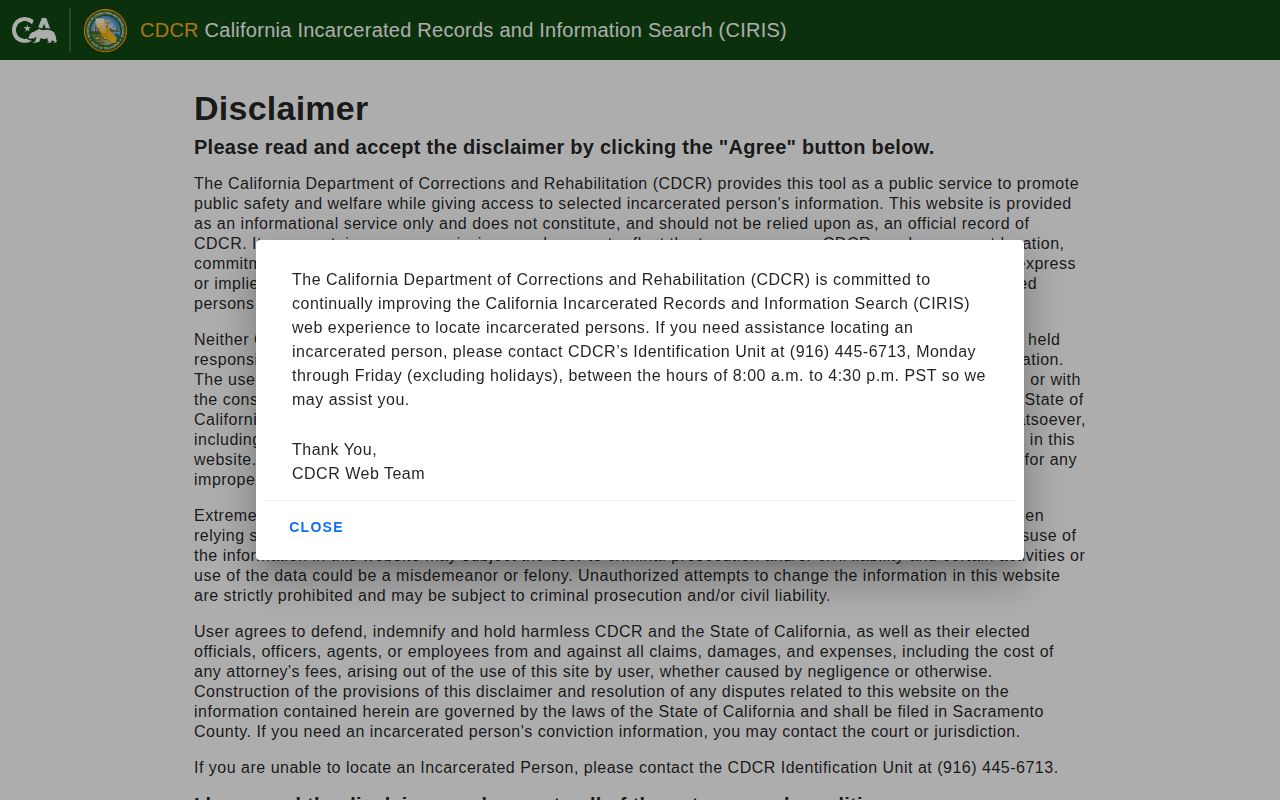
CIRIS belongs to the state-prison branch, so it should not be used as if it contains every person released from the Shasta County Jail.
California Credit Rules for Shasta Releases
Credit rules are the main reason a sentence date may differ from the raw number of days imposed by the court. For local jail custody, Penal Code section 4019 governs many conduct-credit calculations. Penal Code section 4019.4 allows certain local program credit reductions in addition to section 4019 credits when authorized. The court sentence, actual days in custody, exclusions, local program credits, and holds all matter.
For violent felony state-prison cases, Penal Code section 2933.1 is the key credit cap. It limits worktime credit to no more than 15 percent for a person convicted of a violent felony listed in Penal Code section 667.5(c). That is the source of the common "about 85 percent" shorthand, but it applies only to qualifying offenses and sentences. It is not a rule for every California prisoner.
CDCR credit rules also include Proposition 57 and good-conduct/program credit frameworks. Use CDCR's current public material and the individual record rather than assuming a fixed percentage. A release-date calculation can be lawful and still change after new credits, corrected court minutes, or detainers are processed.
- Actual days
- Calendar days spent in qualifying custody before or during the sentence.
- Conduct credits
- Credits that may reduce local custody time when the person qualifies under California law.
- Program credits
- Local or CDCR credits tied to authorized programs, work, education, or other eligible activity.
- Credit cap
- A statutory limit, such as the 15 percent worktime cap for specified violent felonies.
County Jail Dates vs CDCR Dates
A Shasta County Jail date is local. It may depend on bail, local sentence credits, court orders, probation issues, or a transfer. A CDCR date is a state-prison date. It may depend on the sentence, CDCR credits, BPH eligibility, parole placement, PRCS setup, and case-record processing. One person can have both a county jail release date and a later CDCR release date from the same criminal case.
Alternative custody can also change how the date feels to a searcher. A person may be serving a qualifying county sentence through home electronic confinement or a work program rather than sitting in a jail cell. That does not always mean the sentence is complete. The release-date question becomes whether the custodial obligation or alternative-custody term has been discharged.
For a person in Shasta's Alternative Custody Program, a simple jail roster check may be misleading. The person can be out of the jail building and still serving time under county authority. The sentence, program status, and probation or community-corrections records are the better way to determine whether the custody obligation has ended.
| Question | Best source | Why it matters |
|---|---|---|
| When did Shasta jail custody end? | Shasta booking/release record | Shows local time and manner of release or transfer. |
| Was the case sentenced? | Shasta Superior Court | Shows court order, sentence, probation, or prison commitment. |
| When is state-prison release or eligibility? | CDCR CIRIS and BPH | Shows state custody and parole-eligibility vocabulary. |
| Who supervises after release? | Probation, DAPO, court, CDCR | Identifies parole, PRCS, probation, or mandatory supervision. |
Why Shasta Release Dates Change
CDCR's resentencing and release material explains that case records staff process abstracts, minute orders, detainers, parole or PRCS placement, notices, and release funds before release. Local jail dates can also move. A date that looked firm can change when a court corrects credits, a warrant appears, another agency places a hold, or program credits are applied.
Some changes are administrative, and some are legal. A corrected minute order can alter credits. A new hold can prevent community release. A parole or PRCS placement issue can affect the handoff after prison. A VINE alert may arrive when custody status changes, but it will not explain every calculation behind the date.
| Factor | How it can affect the date |
|---|---|
| Court order or resentencing | Changes the sentence, credits, or legal basis for custody. |
| Abstract or minute-order correction | Updates the document used by jail or CDCR records staff. |
| Detainer or warrant | Can block community release or cause transfer to another agency. |
| Good-conduct or program credits | Can move an expected date earlier or later based on eligibility and conduct. |
| Parole or PRCS setup | May require office assignment, conditions, notices, or placement steps. |
| Medical or special placement | Can affect processing and timing before custody ends. |
Confirm a Shasta Release Date
Use VINE for alerts, CIRIS for CDCR state-prison records, the court for sentencing and custody-credit orders, and a public-records request for the actual Shasta County Jail release event. The official release record should ask for the time and manner of release, booking number, charges or holds, release reason, and receiving agency if the person was transferred.
For state cases, CDCR's release-date and parole-eligibility labels should be read with the sentence category. For local jail cases, do not assume a public projected date exists online. Custody staff and court minutes may be the practical path when the person is serving a local sentence.
When a date has already passed, confirm what actually happened. The person may have been released to the community, released to probation, transferred to CDCR, transferred to another county, held for federal custody, or delayed by a court or agency issue. The time and manner of release field is the key Shasta County jail record field because it explains the event rather than only showing that a date came and went.
For future dates, keep checking the source system closest to the custody decision. VINE can provide alerts while the person remains in a participating feed. CDCR can update state-prison dates when credits, hearings, or court orders change. Shasta Superior Court can show new hearings or orders that alter a local custody path. A release-date lookup is strongest when those channels agree.
If those channels disagree, use the newest official court or custody record and ask the source agency to explain the conflict in writing.